Glaucoma is often called the “silent thief of sight” because it shows no symptoms until permanent vision loss has occurred. By the time you notice changes, significant, irreversible damage may already exist.
During a comprehensive eye exam, your eye doctor performs several diagnostic tests designed to detect glaucoma in its earliest stages, when treatment is most effective. Keep reading to learn about the advanced testing methods used for glaucoma diagnosis and how attending regular eye exams can help protect your sight.
Why Early Detection Matters for Glaucoma
Glaucoma occurs when the normal flow of aqueous fluid in your eye becomes disrupted, leading to increased pressure inside the eye (intraocular pressure). In a healthy eye, aqueous fluid flows in and out at a balanced rate, maintaining stable pressure. When this system is compromised, and eye pressure rises, it can lead to permanent optic nerve damage.
The two main types of glaucoma affect your eyes differently. Open-angle glaucoma, the most common form, develops slowly when the drainage system becomes less efficient over time. Peripheral vision typically disappears first, and many people don’t notice this gradual loss until it becomes severe.
The danger of glaucoma lies in its silent progression. Most people feel fine and have no idea anything is wrong until they’ve lost significant vision.
Once vision is lost to glaucoma, it cannot be restored. Regular eye exams allow your eye doctor to detect pressure changes and optic nerve damage before you experience any symptoms, making early treatment possible.
Tests Your Eye Doctor Performs During a Glaucoma Screening
When you come in for a comprehensive eye examination at Cheema MD Eye Care, your eye doctor performs several tests to screen for glaucoma. These tests work together to provide a complete picture of your eye health:
Tonometry
Tonometry measures the pressure inside your eye. Your doctor may use a quick puff of air or a small probe that gently touches your eye after numbing drops are applied. Elevated intraocular pressure is a significant risk factor for glaucoma, though some people develop the disease with normal pressure readings.
Gonioscopy
Gonioscopy allows your eye doctor to examine the drainage angle inside your eye. Using a specialized lens, your doctor can see whether the angle is open or narrow. This test helps determine which type of glaucoma you might have and guides treatment decisions.
Pachymetry
Pachymetry measures the thickness of your cornea. Corneal thickness affects how pressure readings should be interpreted. Thicker corneas can give falsely high readings, while thinner corneas may show falsely low readings. Knowing your corneal thickness helps your doctor understand your actual pressure levels.
Visual Field Testing
This test maps your peripheral vision by having you look straight ahead while indicating when you see small lights appear around your field of view. Because glaucoma typically affects peripheral vision first, this test can reveal the beginning of functional vision loss.
Advanced Diagnostic Technology at Cheema MD Eye Care
At Cheema MD Eye Care, OCT (optical coherence tomography) imaging plays a central role in protecting patients’ vision through precise, early detection. OCT uses infrared light to reflect off the tissues at the back of your eye.
The technology measures how long it takes for these light waves to bounce back, similar to an ultrasound. However, OCT provides much higher resolution images, allowing your eye doctor to see structures in remarkable detail. The scan creates cross-sectional images that show your retina and optic nerve in distinct layers.
For glaucoma diagnosis, OCT specifically examines your optic nerve, the bundle of nerve fibers that carries visual information from your eye to your brain. Glaucoma damages these nerve fibers, causing the optic nerve to thin. OCT can measure the thickness of the nerve fiber layer with precision, detecting damage before it shows up on other tests or causes noticeable vision loss.
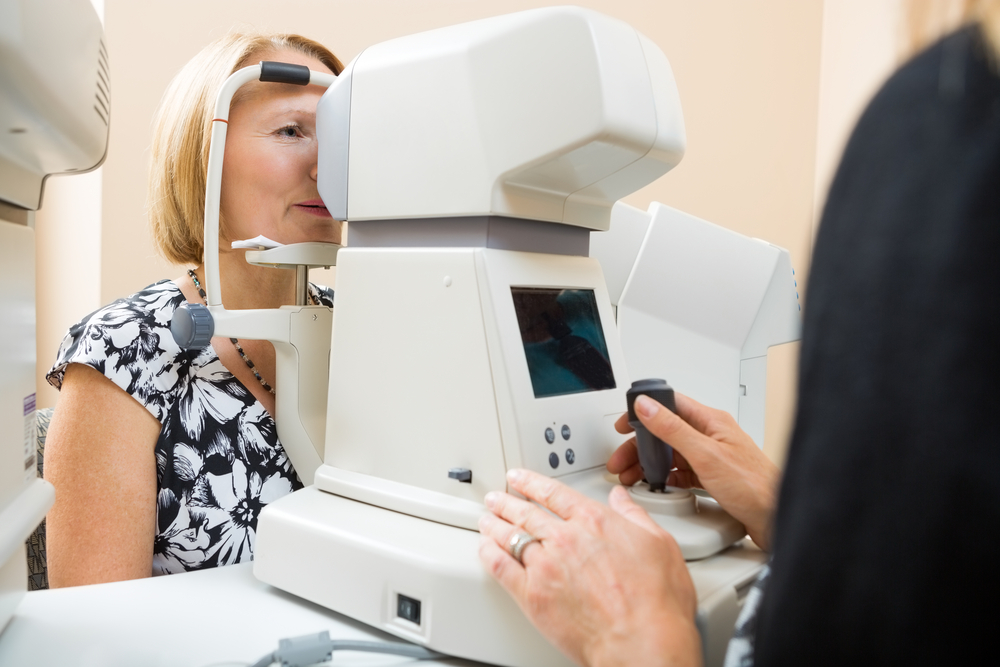
The test itself is straightforward and comfortable. You’ll sit in front of the OCT scanner and rest your chin on a support. You’ll focus your eyes on a green target while the machine scans each eye, which takes just a minute or two.
You might see a red scanning line, but nothing touches your eyes, and you won’t feel anything. Some eye doctors use dilating drops before the scan to get clearer images, but this isn’t always necessary.
What makes OCT particularly valuable for glaucoma management is its ability to track changes over time. Your eye doctor takes a baseline scan when you first have the test. At each subsequent visit, new scans are compared to your baseline and previous images.
This allows for the detection of even small amounts of progression that might otherwise be missed. The detailed measurements help your eye doctor determine whether your current treatment is working effectively or if adjustments are needed.
OCT also helps distinguish glaucoma from other conditions that can affect the optic nerve. The high-resolution images reveal specific patterns of damage that are characteristic of glaucoma. This precision improves diagnostic accuracy and helps ensure you receive the proper treatment for your specific condition.
What Happens After Your Glaucoma Consultation?
Once your testing is complete, your eye doctor will review all results with you. If glaucoma is detected, you’ll learn about the type, stage, and the damage that has occurred.
Your eye doctor at Cheema MD Eye Care will explain your treatment options, which focus on lowering intraocular pressure to prevent further vision loss. Treatment might include prescription eye drops, laser procedures, or surgery.
If your tests show you’re at risk for glaucoma but have not developed the condition yet, your eye doctor will establish a monitoring schedule. Regular follow-up exams allow for early intervention if glaucoma develops. Following your eye doctor’s recommendations is essential for preserving your vision.
If you haven’t had a comprehensive eye examination recently, or if you have risk factors such as a family history of glaucoma, being over 60 years old, or high eye pressure, don’t wait for symptoms to appear.
Schedule a comprehensive eye examination at Cheema MD Eye Care in Kingston, NY, today to protect your vision!